
Why Is CFMOTO Cheaper? Full Explanation

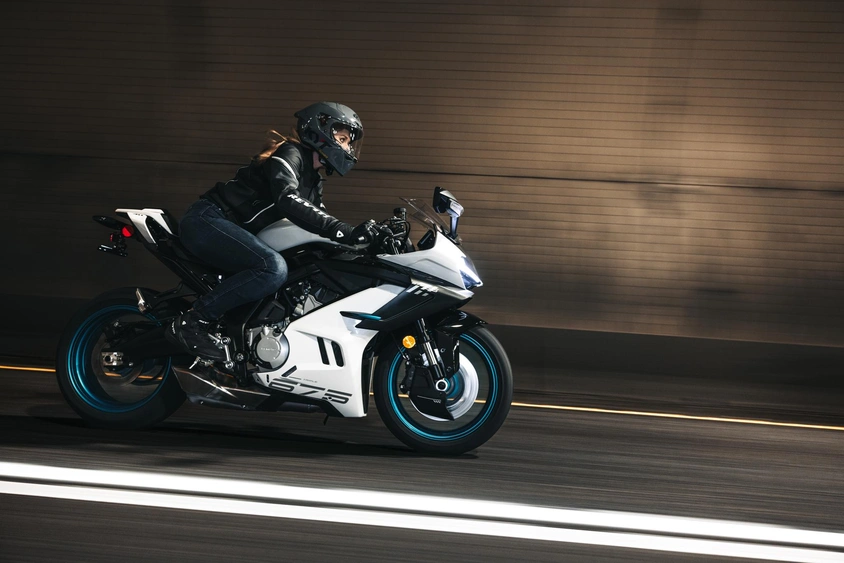
This is often the first question we get at OFF ROAD 104: “CFMOTO is cheaper than Can-Am or Yamaha — but why? Is it because it’s cheap quality? Because it’s Chinese? Is it going to break?”
It’s a very good question, and it deserves an honest answer. Because no, it’s not simply “cheap.” There are concrete and verifiable reasons why CFMOTO can offer you more for less — and there are also important nuances to understand. Here is the full explanation.
FIRST: HOW BIG IS THE PRICE DIFFERENCE?
To put things into perspective, here are some real comparisons between equivalent 2026 models:
| CFMOTO | Approx. Price | Direct Competitor | Approx. Price | Difference |
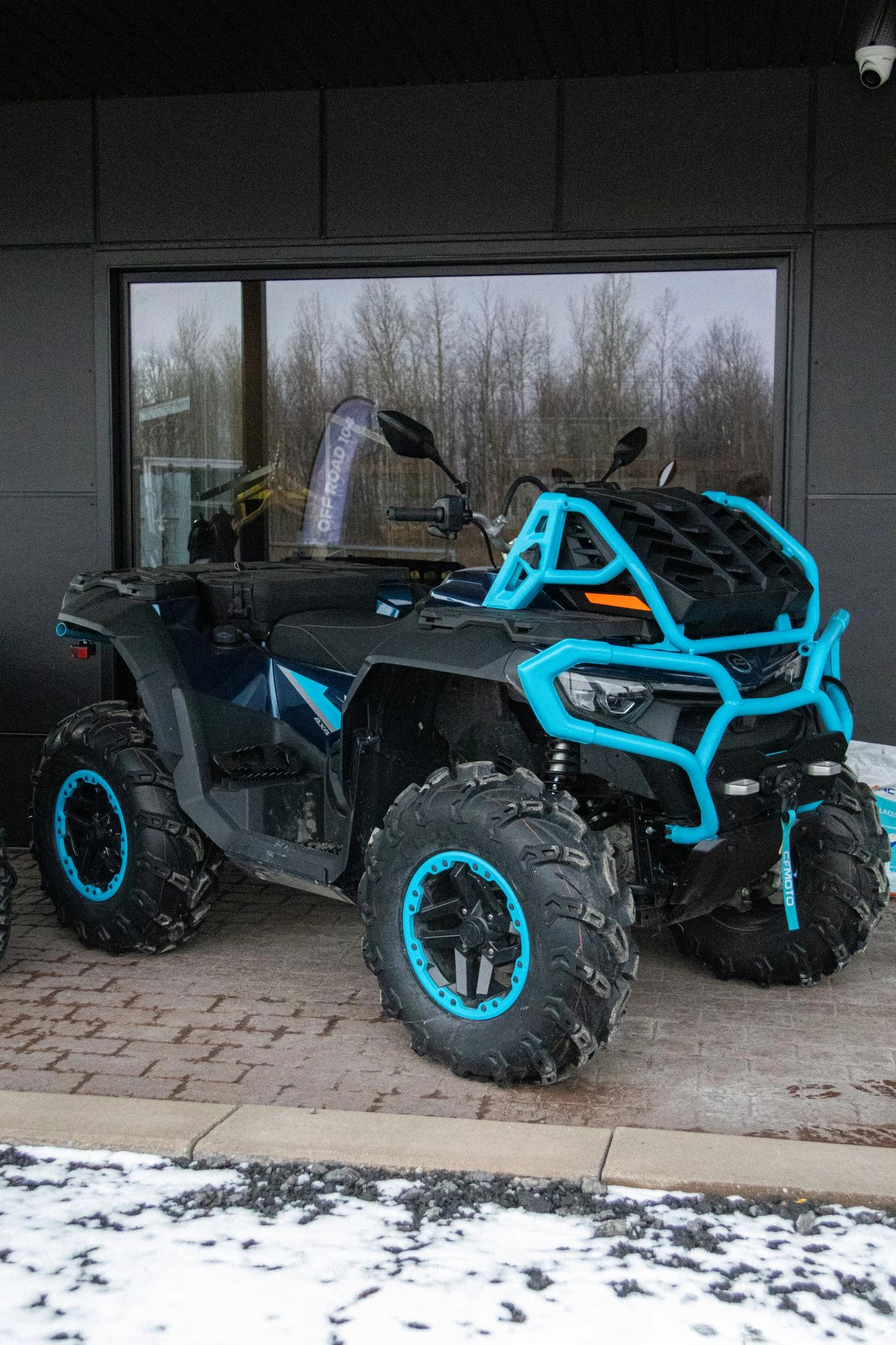
| CFORCE 600 | ~11 949 $ | Can-Am Outlander 570 | ~14 000 $+ | ~2 000 $+ |
| ZFORCE 950 Sport | ~21 424 $ | Polaris RZR Pro XP 1000 | ~26 000 $+ | ~5 000 $+ |
| UFORCE 1000 | ~21 924 $ | Polaris Ranger 1000 | ~26 000 $+ | ~4 000 $+ |
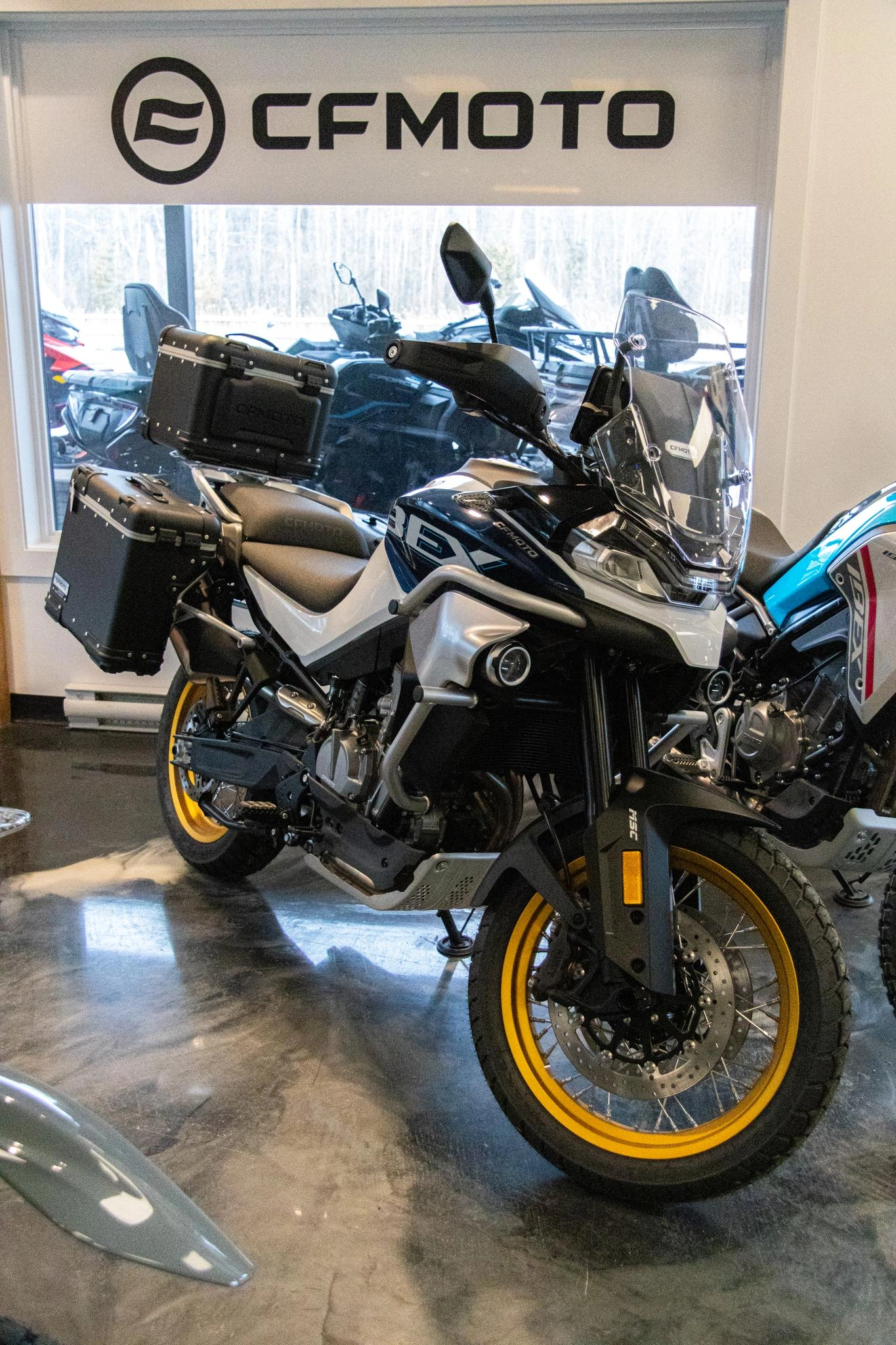
| IBEX 450 (moto) | ~8 749 $ | KTM 390 Adventure | ~9 000 $+ | ~500 $+ |
| 675 SS (moto) | ~10 749 $ | Kawasaki ZX-6R | ~14 000 $+ | ~3 000 $+ |
Prices before taxes, for reference only.
This is not a marginal difference. On an ATV or side-by-side, the gap can represent between 15% and 30% of the purchase price. For a Quebec family, that’s between $2,000 and $5,000 more in your pocket. So why does this gap exist?
THE 5 REAL REASONS WHY CFMOTO COSTS LESS
REASON 1: A ULTRA-MODERN FACTORY IN CHINA — NOT A “CHEAP” ADVANTAGE, A STRUCTURAL ONE
Manufacturing costs in China are lower than in North America or Europe. That’s an economic fact, not a flaw. What matters is how that advantage is used.
CFMOTO doesn’t use it to cut corners on component quality — it uses it to deliver more value at the same price. The Hangzhou factory spans 150,000 m², employs over 1,500 people including hundreds of R&D engineers, and produces over 600,000 vehicles per year. This is high-level industrial production, not subcontracting.
Can-Am manufactures largely in Mexico. Polaris manufactures in Mexico and India. Yamaha manufactures in Asia. Kawasaki manufactures in Asia. All these manufacturers benefit from lower production costs — CFMOTO simply does the same, but within its own facilities and with its own engineers.
REASON 2: MASSIVE ECONOMIES OF SCALE
CFMOTO is one of the largest recreational vehicle manufacturers in the world. Its market capitalization exceeds $28 billion — about 10 times that of Polaris. When you produce 600,000 vehicles per year, the unit cost of every component, engine, and TFT screen drops significantly compared to smaller-scale manufacturers.
These economies of scale are directly reflected in the final sale price. It’s the same logic that allows Costco to sell cheaper than a local grocery store — not because quality is lower, but because volume reduces costs.
REASON 3: MUCH LOWER MARKETING AND BRANDING EXPENSES
Polaris spends tens of millions of dollars each year on sponsorships, TV advertising, sports partnerships, and brand image maintenance. Can-Am does the same. These costs are built into the price of each vehicle.
CFMOTO, as a brand still growing in North America, invests much less in mass marketing. Instead, it relies on word of mouth, owner reviews, and product quality to build its reputation. Lower marketing spend = lower costs passed on to the buyer.
REASON 4: A DELIBERATE MARKET PENETRATION STRATEGY
This point is often overlooked in discussions about CFMOTO pricing. The brand has intentionally positioned itself below competitors to gain market share quickly. This is not financial distress — it’s strategy.
In France, for example, CFMOTO saw 95% growth in registrations in 2025, reaching 5,887 units and becoming the 6th largest motorcycle brand in the country. This explosive growth is directly tied to pricing strategy. The brand accepts thinner margins today to build long-term customer loyalty.
CFMOTO is clear about its goal: to become the first Chinese recreational vehicle brand to reach premium status. Today’s lower prices are an investment in tomorrow’s recognition.
REASON 5: NO OVERBUILT DEALER NETWORK TO FINANCE
Can-Am and Polaris maintain thousands of dealerships across North America, with training programs, certifications, specialized tools, and costly contracts. Part of these structural costs is reflected in vehicle prices.
CFMOTO’s dealer network in North America is smaller — which can be a disadvantage in terms of geographic coverage, but also a real reason why prices are lower. Less infrastructure to support = fewer costs passed to consumers.
BUT IS THE QUALITY ACTUALLY THERE?
Now to the core question. A low price can mean two very different things: either corners are being cut, or efficiency is higher. For CFMOTO, the reality is nuanced.
WHAT IS OBJECTIVELY HIGH QUALITY
CFMOTO does not compromise on critical components. On recent models, you’ll find:
Bosch fuel injection — same supplier as BMW Motorrad and KTM
J.Juan brakes — a direct subsidiary of Brembo
KYB suspension — a top-tier Japanese reference
CVTech transmission (Canadian) on ATVs and side-by-sides
KTM LC8c engine on 800 models (IBEX 800 E, 800 NK)
These are not generic parts. They are the same suppliers used by major brands. And CFMOTO manufactures engines for KTM’s 790 and 890 — KTM chose CFMOTO for that, not the other way around.
THE HYUNDAI & KIA COMPARISON: A STORY WE’VE SEEN BEFORE
Twenty-five years ago, Hyundai and Kia were synonymous with “cheap and unreliable.” The low prices were real. The reputation was deserved — at the time. Today, both brands consistently rank among the most reliable in independent studies, while still being more affordable than premium European or Japanese brands. Low price became an advantage, not a flaw.
CFMOTO is following the exact same path. The machines from 10 years ago weren’t perfect. Since 2015, and especially since 2020, quality has improved dramatically. Today’s owners confirm it — satisfaction rates are comparable to major brands, with the added benefit of getting more for their money.
THE 5-YEAR WARRANTY: THE STRONGEST PROOF OF CONFIDENCE
There’s one argument that can’t be ignored: if CFMOTO didn’t trust the quality of its vehicles, would it offer a 5-year powertrain warranty — while Can-Am and Polaris offer only 6 months?
The standard CFMOTO Canada warranty includes 12 full months plus an additional 48 months on the engine, with no mileage limit and only a $100 deductible. A manufacturer that expects its machines to fail does not offer that level of commitment. This is the clearest proof that lower price does not mean lower quality.
WHAT YOU’RE REALLY PAYING FOR WHEN YOU BUY MORE EXPENSIVE
When you pay $5,000 more for a Polaris RZR or Can-Am Maverick, you are paying for:
A brand with 40 years of established reputation
A dense dealership network across Quebec
Better resale value in 3–5 years
More mature electronics and connectivity
These are real advantages. If these factors matter a lot to you — especially resale value or service access in remote areas — they may justify the higher price.
But if your priority is a well-equipped, mechanically solid machine, backed by a serious warranty, built to ride and enjoy — CFMOTO’s lower price is not a red flag. It’s simply the result of a different cost structure and a deliberate business strategy.
IN SUMMARY
CFMOTO is cheaper for concrete structural and strategic reasons — not because the machines are low quality. The critical components are world-class, the mechanics have proven reliable in recent years, and the 5-year warranty is unique in the industry.
Come see us at OFF ROAD 104 in Saint-Jean-sur-Richelieu. We’ll answer all your questions honestly — even the ones that are less flattering to the brand!